
By Leo Cardez
From PHN Issue 57, Summer 2024
Months later, I still remember the way the nurse looked at me when I described my recent weight gain, hair loss, and depression. It was clear she either wasn’t listening or didn’t believe me—or, more likely, simply didn’t care. Almost two years later, I was diagnosed with overactive thyroid, but not before months of fighting for treatment. The struggle inspired me to train to become an Illinois Department of Public Health certified healthcare peer educator. As a peer educator, I speak to newly incarcerated people during
their onboarding orientation about specific health risks in prison. I also explain their options when they are dissatisfied with the level of their healthcare and treatment.
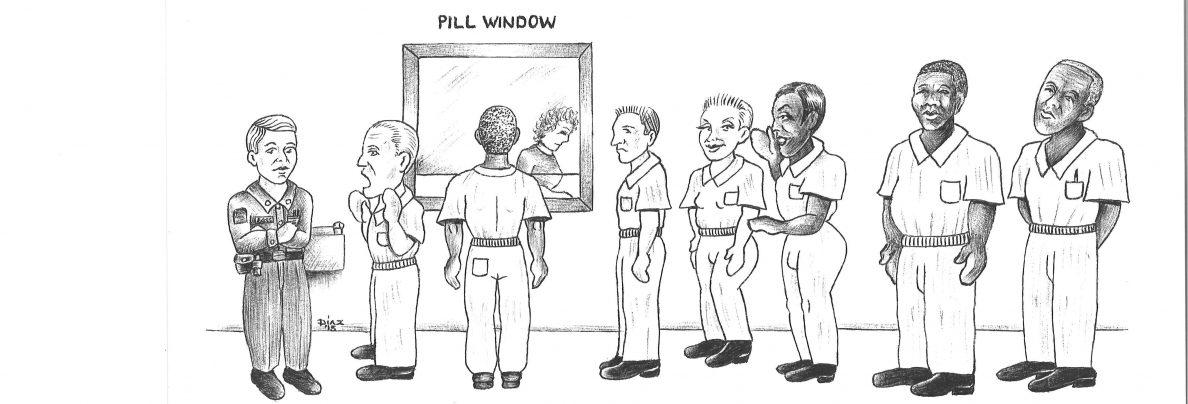
Communication issues between prison healthcare workers and people in custody aren’t new; quite the opposite. As a peer educator, I’ve noticed “not feeling heard” is a common refrain among my community. They feel dismissed. My old cellmate Liam McCauley has been suffering from severe eye issues for almost a decade. He told me, “It’s ridiculous to the point of being absurd. I’m suffering every day. My mother is a healthcare worker and I’ve consulted outside literature about my symptoms. Everything points toward a serious disease, and I need to see a specialist. But being referred and then given an appointment to see a specialist is its own gauntlet.” I’m no doctor, but his bright red, bloodshot eyes and constant struggles to see make it pretty clear. The eye drops they keep giving him aren’t doing enough. So he presses on with homemade solutions, hot water compresses and the like, hoping something will help ease the pain. He’s not the exception.
Continue reading “HOW TO FIGHT FOR YOUR RIGHTS TO ADEQUATE HEALTHCARE IN PRISON”
