Ask PHN: Hippa in Prison

By Jamila Harris
From PHN Issue 54, Fall 2023

Dear PHN,
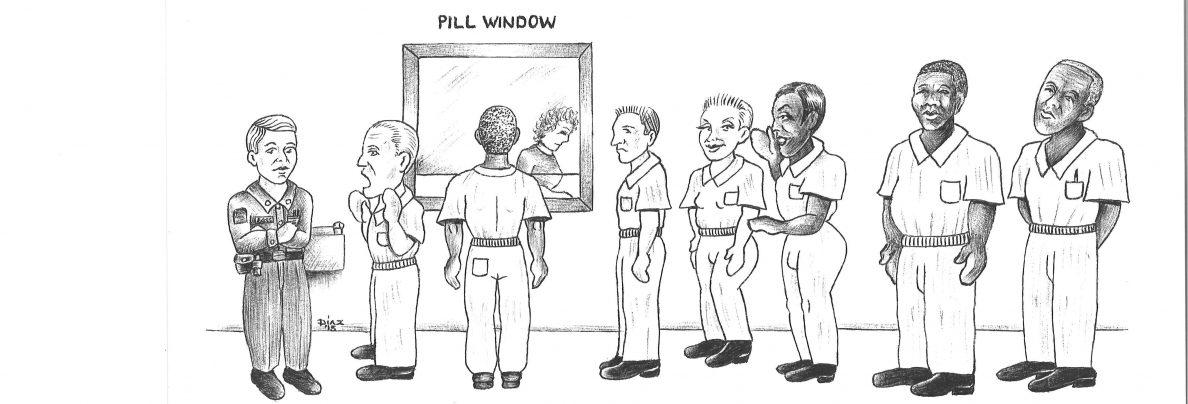
Could you explain the rules and violations of the HIPAA Act? Is it a violation if the correctional officer stays in the room while we are seeing medical staff and knows my medical information?

– L.W.

Dear L.W.,
When it comes to the rights of incarcerated individuals and the privacy of their medical information, a valid concern always comes to mind. “Do the correctional officers have the right to know your medical information?” A person who is incarcerated has certain legal rights under the Health Insurance Portability and Accountability Act, also known as HIPAA. This act is a federal law passed in 1996 that protects how medical information of individuals—including identifying factors such as address, birthdate, and social security number—is transferred and disclosed to others. Under the law, this identifiable health information is known as “protected health information.”

Continue reading “Ask PHN: Hippa in Prison”

Incarcerated by Cancer

By Shawn Harris
From PHN Issue 53, Summer 2023

“There is a list of 132 inmates diagnosed with cancer,” announced the psychologist assigned to my block. She was sitting in front of her computer as the Psychology Department head and I discussed the commencement of the first-ever Cancer Support Group at my prison. I had for the past year been stressing the importance of having a cancer support group at my facility. We were having a meeting to finalize the date and time when the group would start. We weren’t certain if there were even enough inmates diagnosed in the prison to warrant a support group. In fact, the Psychology Department head specifically asked me how many inmates I knew were currently battling the illness. He even struggled to recall one or two he remembered working with in recent days. So, when the psychologist said the number, we were all stunned.

Continue reading “Incarcerated by Cancer”

Ask PHN: HEMORRHOIDS

By M. Ali
From PHN Issue 53, Summer 2023

Dear Prison Health News,
I was wondering if you could do an article on the topic of hemorrhoids. Some points of interest might be:
What causes hemorrhoids?
Is bleeding a common occurrence?
What are the treatments for them?

Sincerely, Pete B.

Dear Pete B.,

What are hemorrhoids?
Hemorrhoids are swollen veins that can develop inside the rectum and around the anus. There are two types of hemorrhoids: external hemorrhoids, which occur beneath the skin around the anus, and internal hemorrhoids, which occur inside the rectum. The symptoms depend on the type of hemorrhoid.

Continue reading “Ask PHN: HEMORRHOIDS”

Recognizing LONG COVID

By Kirby Sokolow
From PHN Issue 53, Summer 2023

Three years have passed since the World Health Organization first declared COVID-19 a pandemic. However, people worldwide continue to suffer from this novel coronavirus’ devastating effects. Among them are an estimated 65 million people with symptoms of Long COVID.

Long COVID—also called post-COVID syndrome or post-acute sequelae of SARS-CoV-2 infection—is when someone keeps having COVID-19 symptoms or gets new symptoms that last weeks, months, or years after they get COVID. Anyone infected with COVID-19 can develop Long COVID, even vaccinated folks and people whose initial symptoms were mild. However, vaccination does lower your risk of both getting COVID and developing long COVID.

Continue reading “Recognizing LONG COVID”

Convict Chronicles: FEELING OFF? You’re Not Alone.

By Leo Cardez
From PHN Issue 53, Summer 2023

I read an article in Men’s Health that really struck me. It wasn’t specifically written for the inmate community, but it should have been. In the piece, Dr. (psychiatrist) Gregory Scott Brown is discussing something called adjustment disorder (AD).

In layman terms, AD is a disproportionate reaction to something stressful in one’s life. AD may make one feel worried, hopeless, or a general sense of unease. Sound familiar? Post-COVID inmate issues are pretty similar across the U.S.: anger over job/program/assignment loss, despair about the difficulty in staying in touch with loved ones, sensitivity over race relations, and general malaise over extended lockdowns brought about by anything from quarantine protocols to staff shortages. In time, all these tiny attacks to your routine and well-being add up.

Continue reading “Convict Chronicles: FEELING OFF? You’re Not Alone.”

“MARCH” of the Legionella

By Thomas Michael Simmons
From PHN Issue 53, Summer 2023

Many baby boomers recall 1976, when people attending an American Legion convention fell gravely ill to a form of pneumonia later named “legionnaires disease.” Legionnaires disease is caused by the bacteria Legionella pneumophila, which is among the most common causes of pneumonia. Legionella can be attributed to biofilms found in plumbing and water storage systems, construction, and water temperature fluctuations. They thrive and grow quickly in 98.6-degree Fahrenheit environments. Legionella grows best in large, complex, and poorly maintained water distribution systems, such as air conditioning and cooling systems.

Continue reading ““MARCH” of the Legionella”

Dehumanizing of Persons Involves Words

By Daniel Ramirez
From PHN Issue 52, Spring 2023

Criminality begins with potential perpetrators dehumanizing potential victims in their own mind. Using words such as this person is a “monster” or an “animal” or even a “snake.” Not worth the ground he/she walks on. And so on… We put a negative spin on a person so we can have a reason to look down on them or treat them unfairly. Potential perpetrators use labels upon people whom they want to victimize and treat any way they want.

Continue reading “Dehumanizing of Persons Involves Words”

The INHUMANITY

By Marino Leyba
From PHN Issue 52, Sring 2023

Justice!
Just us!
Even when we are innocent they are always quick to try and bust us.

Turn up or turn out, truth out, the life we live I am not proud to talk about. Imagine being locked up and there is no way of walking out
I am barely walking now…

Continue reading “The INHUMANITY”

A Word About Syphilis

By Thomas Michael Simons, IPE
From PHN Issue 52, Spring 2023

While its origin is not completely known, the earliest evidence of syphilis was found in the Pre-Columbian Indigenous population of South America. Syphilis is caused by the Treponema pallidum spirochete bacterium, and it can cause serious health problems if not treated. It is transmitted by coming into contact with a syphilitic sore during anal, oral, or vaginal sex. These sores appear on or around the anus, penis, or vagina (they’re found in the rectum, on the lips, or in the mouth). It can be congenitally (present before birth) spread from a pregnant person to a fetus or baby.

Continue reading “A Word About Syphilis”

Prisoners Surviving Mental Illness

By Wayne Thomas
From PHN Issue 52, Spring 2023

There is an increasing restriction of constitutional rights and other safeguards on people with mental illness in prison. The punishment of individuals with psychiatric problems in prisons might affect the perception of people impacted by mass incarceration.

We are troubled by the punishing of people who suffer from mental and emotional disorders, who are often forced to take antipsychotic drugs during the trial or pretrial setting. There are a large number of instances in prisons and courthouses when a person with mental illness is forced to take medications against their will. The person is incapacitated by being put in a medication-induced stupor and then removed to a courtroom where they are sentenced to a term of incarceration. This is a process that maintains physical control over the mentally ill persons, forced by law to subject themselves to take antipsychotic medications when released. Often they are threatened with the possibility of return to confinement—to ensure medication adherence for formerly incarcerated people who are categorized as mentally ill.

Continue reading “Prisoners Surviving Mental Illness”