Ask PHN: Prostate Problems

By Seth Lamming
From PHN Issue 52, Spring 2023

Dear Prison Health News,
Would you please send any and all information on an enlarged prostate? What is the end result if I have to have it removed?

– Sincerely, Mr. Tracy

Dear Mr. Tracy,
Prostate health is an important topic for anyone who has a penis. The prostate is a gland about the size of a walnut that sits below the bladder and in front the rectum. It wraps around the urethra, the tube that pee and semen come out of. When the prostate is big, it squeezes the urethra and makes it harder to pee. Its main purpose is to make some of the fluid that goes into semen. In this article, we will discuss benign prostatic hyperplasia (BPH) and prostate cancer.

Continue reading “Ask PHN: Prostate Problems”

Medications for OPIOID USE DISORDER

By Hannah Calvelli and Dan Lockwood
From PHN Issue 52, Spring 2023

Medications for Opioid Use Disorder (MOUD) is a term used by addiction and medical professionals when referring to the three medications (buprenorphine, naltrexone, and methadone) that are approved by the FDA for the treatment of opioid use disorder. You may have heard of Medication Assisted Treatment (MAT), which is a similar term that refers to the use of FDA approved medications for both alcohol use disorder and opioid use disorder. The difference between MOUD and MAT is that MAT is part of a larger treatment and recovery plan that includes counseling and behavioral therapy, whereas MOUD is treatment with medications only.

Continue reading “Medications for OPIOID USE DISORDER”

What to Know About COVID-19 Tests

By M. Ali
From PHN Issue 52, Spring 2023

COVID-19 is an illness caused by a coronavirus called SARS-CoV-2. It spreads when a person with the virus (symptomatic or asymptomatic) releases droplets and particles from their mouth or nose. This can occur when they breathe, cough, or sneeze in close contact with another person. It can also occur in poorly ventilated or crowded indoor settings, such as correctional and detention facilities. The best way to prevent COVID19 infection and reinfection is to practice basic hygiene like washing your hands with soap and water, wear a well-fitting mask, stay up to date with vaccines, and avoid contact with individuals who may have the virus. While the use of masks to prevent the spread of this virus has been politicized and debated, randomized controlled trials have found that community-level mask wearing does reduce COVID-19 infections and may be an especially effective resource in crowded facilities.

Continue reading “What to Know About COVID-19 Tests”

Ask PHN: Hernias

By Olivia Duffield
From PHN Issue 51, Winter 2023

Dear Prison Health News,
Intestinal hernias is a topic you could write an article on. Some points you could cover:
· What causes a hernia?
· How common are they?
· Other than discomfort, are they a problem if there are no complications?
· How often do complications occur?
· Is it possible (or safe) to live indefinitely with a hernia?

– Jon Tillman

Dear Mr. Tillman,
Thank you for this excellent suggestion. Hernias occur because of a tear or a weak spot in the tissue surrounding an organ. The muscle and tendons of the abdominal wall from the ribs to the top of the legs form a corset that holds the intestines in place. Some places in this corset tend to be weaker than others, and those places are typical sites of hernias. Inguinal (groin) hernias are the most common type. Researchers estimate that about 27% of men and 3% of women will develop an inguinal hernia at some point in their lives (NIDDK).

Continue reading “Ask PHN: Hernias”

The ABCs of HEPATITIS

By Hannah Calvelli and Lucy Gleysteen
From PHN Issue 51, Winter 2023

Hepatitis refers to inflammation of the liver. There are several types of viruses that cause hepatitis, but this article will focus on types A, B, and C. The liver is a large organ in the body, located under the right rib cage. It has many important roles, including cleaning toxins out of the body; breaking down proteins, carbohydrates, and fats to help digest food; regulating the amount of blood in the body; and helping blood in the body to clot. Hepatitis is caused by infections from different viruses (called hepatitis A, B, and C) that damage the liver.

Continue reading “The ABCs of HEPATITIS”

Making Sense Of The Letters Behind Your Healthcare Provider’s Name

By Seth Lammming and Hannah Faeben
From PHN Issue 51, Winter 2023

At some point in time, you’ve probably been in a doctor’s office or medical facility and noticed all sorts of letters after people’s names. MD, PA, DO, NP, RN, the list goes on. The alphabet soup can get confusing. In this article, we will break down the basic differences between physicians and mid-level providers and what some of these letters mean.

Continue reading “Making Sense Of The Letters Behind Your Healthcare Provider’s Name”

An Open Letter to the INCARCERATED OF PENNSYLVANIA

By Anonymous
From PHN Issue 51, Winter 2023

It has been more than a year since the Pennsylvania Department of Corrections vaccinated its inmate population. Mask mandates have been lifted. The unvaccinated have been allowed off quarantine and spread throughout general population. And yet here we are, another year gone, and the pandemic restrictions limiting activity and quality of life within the prisons remain. The PA DOC has successfully used a deadly pandemic as a smoke screen to institute many of the wide-ranging and destructive restrictions it’s wanted all along.

Continue reading “An Open Letter to the INCARCERATED OF PENNSYLVANIA”

Breast Cancer SELF-EXAMS & SCREENING

By Frankie Snow
From PHN Issue 51, Winter 2023

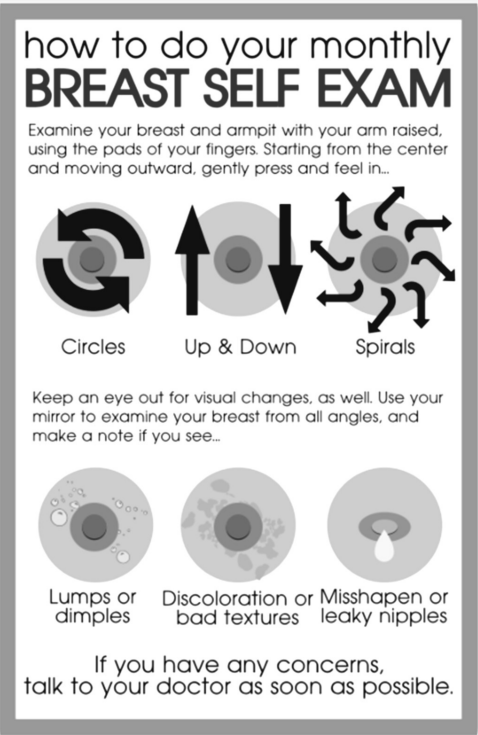
It can be helpful to know the look and feel of your breasts so you are aware when changes occur. If you notice lumps, pain, or changes in size, talk with your doctor about further testing. Try to complete a self-exam once a month, usually seven days after the start of your period, or on the same date each month if you do not menstruate.

Continue reading “Breast Cancer SELF-EXAMS & SCREENING”

Surviving Breast Cancer

By Chrystal Pfeifer
From PHN Issue 51, Winter 2023

My name is Chrystal and I have been on the inside since 1988. … Yes, 33 years! I have always, always been aware of the fact that we must take care of ourselves physically, emotionally and spiritually. I was 24 when I entered and am now 56. I could write a book.

Continue reading “Surviving Breast Cancer”

Ask PHN: Colon Cancer

By Belinda Christensen
From PHN Issue 50, Summer/Fall 2022

Dear Prison Health News,
Thank you for having me on your mailing list. By the way, do you know anything about colon cancer? My father died of it in July of 1999, and one of my brothers died of it in 2013, so I know it runs in my family. I would highly appreciate learning more about it, if you can.
— Gabriel Fuentes, California

Dear Mr. Fuentes,
Thank you for your letter, and for the wonderful drawing. I’m very sorry to hear that your father and brother passed away from colon cancer. I’ve provided some information below about screening and prevention from the American Cancer Society and the Colorectal Cancer Alliance, two organizations that work to educate people about cancer prevention and treatment.

Continue reading “Ask PHN: Colon Cancer”