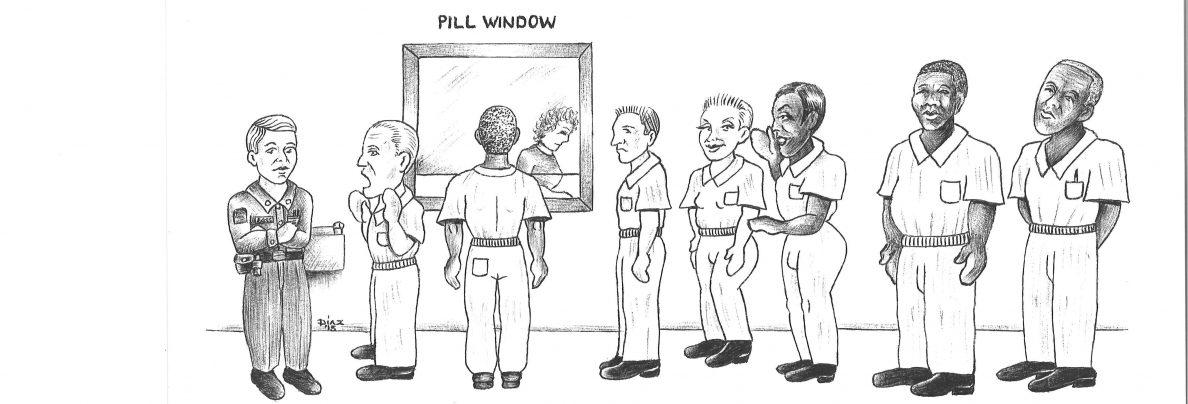
Fight For Your Medical Rights!

By Brother W. (Uthman) Williams

From PHN Issue 28, Spring 2016

The New York State prison health care system has been broken for a long time now. In 1977, women incarcerated in New York brought civil rights claims challenging medical care. Chief Judge Kaufman responded: “The sad often desperate plight of many incarcerated in our nation’s prisons is most dramatically revealed by the all too frequent petitions of inmates who have been denied access to basic medical services.” Continue reading “Fight For Your Medical Rights!”

Accessing Gender-Affirming Health Care in Prison

by Mrs. Ge Ge

From PHN Issue 28, Spring 2016

Hello friends,

My name is Mrs. Ge Ge. I am a trans woman incarcerated in PA. I am also the founder of an LGBT+ (lesbian, gay, bisexual and transgender–plus) organization called L.I.G.H.T. We aim to educate readers about DOC policies that protect them, laws, health and politics. We use this information to strengthen our ability to fight the prison industrial complex, by using its own policies against it. I am writing simply to spread some knowledge on how to get gender affirming health care in prison. There are several useful tools you can use to accomplish this. I will list some addresses at the end of this article. Continue reading “Accessing Gender-Affirming Health Care in Prison”

How Loved Ones Outside Can Advocate for People in Prison


By Theresa Shoatz

From PHN Issue 25, Summer 2015

For readers who have family, friends or a partner on the outside to help them get urgently needed health care, here are some suggestions for those outside prison to try. Philadelphia activist Theresa Shoatz perfected these steps while advocating for her father, former Black Panther Russell Maroon Shoatz, a political prisoner in Pennsylvania. As she says, “I have a passion to keep him healthy because one day, we’ll get him out.”

10 steps for loved ones on the outside:

  1. Your loved one in prison will probably need to fill out a medical release form to let you access their health information. In many places, they can ask a counselor for this form. Continue reading “How Loved Ones Outside Can Advocate for People in Prison”

The Lasting Impact of Brain Injury

by Drew Nagele, MJ Schmidt, and Monica Vaccaro
From PHN Issue 21, Summer 2014

Each year, there are 2.5 million new traumatic brain injuries in the United States. In fact, it is estimated that 13.5 million people—or 4.5% of the population—are living with some type of acquired brain injury.
The number of people who are living with a brain injury in prisons is far greater than we would expect, and most of these injuries were never diagnosed or treated. Recent research suggests that about 60% of people in prison have had an acquired brain injury sometime in their life, most often prior to becoming incarcerated. This is important, because the problems that result from a brain injury make almost all aspects of life harder. Brain injury can make a person more likely to make poor decisions, increasing their risk for getting in trouble with the law and decreasing their likelihood of being successful in everyday life. The effects of brain injuries also can make it harder for a person to succeed in prison education programs or to meet parole conditions.

Continue reading “The Lasting Impact of Brain Injury”

Prison SMART: Using Breath to Manage Stress  

by Jeanine Campbell          

From PHN Issue 18, Fall 2013

   Prison Stress Management and Rehabilitation Training (Prison SMART) is a simple program that teaches a breathing technique designed to reduce stress, heal past trauma, and provide ways to handle negative emotions such as anger, guilt, and frustration. Started by the International Association for Human Values (IAHV), Prison SMART is active in prisons in over 36 countries and in 30 state, county, and federal correctional institutions across the U.S. The program is also adapted for correctional staff, the formerly incarcerated, and people in halfway houses, on parole or probation, and in juvenile justice programs. Continue reading

Prison Yoga

by Jeanine Campbell

From PHN Issue 17, Summer 2013

The Prison Yoga Project is an organization based in California that seeks to establish yoga and mindfulness meditation programs in prisons and rehabilitation centers across the United States. They give trainings for yoga instructors interested in starting yoga programs in prisons, and have established over 20 prison yoga programs in correctional facilities across the country. Continue reading “Prison Yoga”