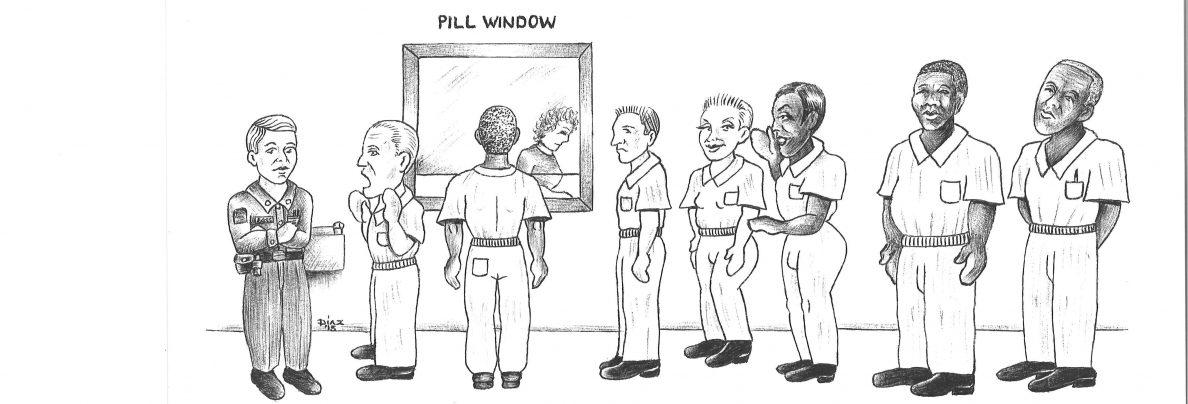
Living with a Mental Illness

By Russell Auguillard
From PHN Issue 54, Fall 2023

Living with a mental illness often requires a person to create a schedule of activities, groups and therapy. Where you are, you can start now, with groups, therapy and approved programs that are operating through your prison or facilities. One common mental illness a person can be affected by and go through, but not even know that they have it, is antisocial personality disorder. One place they find themselves without even being conscious of it is in the prison system as first, second, or multiple-time offenders. You can do something about it starting today, by first beginning to manage your thoughts, then your life.

Continue reading “Living with a Mental Illness”

Mental Health is Essential

By Ethan Macks

From PHN Issue 46, Spring/Summer 2021

With all the concern going around about COVID-19 and what is essential and what is not, I feel that there needs to be greater consideration for mental health.

Being incarcerated, I see a lot of stigma concerning the issue of mental health. Being labeled as SMI (Seriously Mentally Ill) on the streets, I’ve had ample experience with mental health and how it should be treated. The National Institute of Mental Health defines SMI as a “mental, behavioral, or emotional disorder resulting in serious functional impairment, which substantially interferes with or limits one or more major life activities.” SMI commonly refers to a diagnosis of psychotic disorders (schizophrenia and schizoaffective disorder), bipolar disorder, major depressive disorder with psychotic symptoms, treatment-resistant depression, anxiety disorders, eating disorders, and personality disorders.

Continue reading

Complex PTSD

By Lucy Gleysteen and Brittany Mitchell

From PHN Issue 41, Winter 2020

What is complex trauma, or complex PTSD?

Complex trauma is a trauma that is repetitive, occurs over a period of time, and is frequently interpersonal in nature. Complex PTSD most often develops in childhood and can include experiences of abandonment at an early age, physical abuse or neglect, sexual abuse, emotional abuse, living in a neighborhood that has high levels of violence, being impacted by war, repetitive and invasive medical procedures, or other experiences of being in a traumatic environment for a prolonged period of time. Not everyone who has had traumatic experiences develops complex PTSD. However, those who do might experience certain difficulties that can be painful to live with.

Continue reading