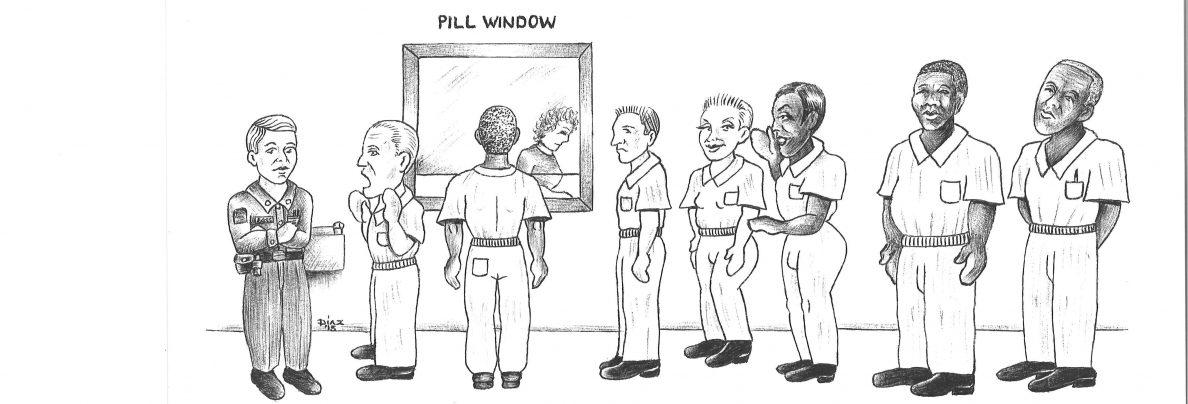
Tips for Navigating Healthcare in Prison

By Chad Miller
From PHN Issue 55, Winter 2024

Please inform your readers that the point and purpose of federal laws like the Health Insurance Portability and Accountability Act (HIPAA) and the Americans with Disabilities Act (ADA) are to protect you and your privacy.

Note: I have found when I deal with medical staff concerning my health, records, or services, I throw acronyms like “HIPAA” or “ADA” around and things begin to happen, such as appointments to be seen. I encourage all incarcerated readers to contact your law librarian, counselor or ombudsman at your institution and learn the standard operating procedures to get the staff to perform well. They hold us to a standard; I hold them to the written standards.

Continue reading “Tips for Navigating Healthcare in Prison”

Ask PHN: Hippa in Prison

By Jamila Harris
From PHN Issue 54, Fall 2023

Dear PHN,
Could you explain the rules and violations of the HIPAA Act? Is it a violation if the correctional officer stays in the room while we are seeing medical staff and knows my medical information?

– L.W.

Dear L.W.,
When it comes to the rights of incarcerated individuals and the privacy of their medical information, a valid concern always comes to mind. “Do the correctional officers have the right to know your medical information?” A person who is incarcerated has certain legal rights under the Health Insurance Portability and Accountability Act, also known as HIPAA. This act is a federal law passed in 1996 that protects how medical information of individuals—including identifying factors such as address, birthdate, and social security number—is transferred and disclosed to others. Under the law, this identifiable health information is known as “protected health information.”

Continue reading “Ask PHN: Hippa in Prison”

Prisoners’ Health Must Matter

By Bobby Bostic

From PHN Issue 47, Fall 2021

Although they have committed crimes, prisoners are still entitled to adequate healthcare
They are still human beings that should get medical treatment that’s fair
To be captured and denied care by your captor is a form of torture
As a result, you also suffer mentally and emotionally from your internal physical scorture

Locked away from society, you have no one to call out and cry to
You file your medical grievances to demand the treatment that you are due
For many decades, prison advocates have been litigating against greedy medical providers
Battling against powerful law firms hired by government insiders

Continue reading