NO JUSTICE!: When Sex Work Brands You as a “Sex Offender” in New Orleans

by Deon Haywood and Laura McTighe

From PHN Issue 10, Spring 2011

Since our founding in 1991, Women With A Vision, Inc (WWAV) has been standing with the women of New Orleans, no questions asked. We have been trusted with stories that few others hear. But little could have prepared us for that day when ‘J’ pulled out her photo identification card, which read ‘SEX OFFENDER’ in block orange letters. As she explained how she had gotten picked up during a Mardi Gras round up and charged with a crime against nature, she was filled with anger and pain that marked this as the latest instance in a long history of exploitation. She is only 23 years old, one month clean from an 8 1⁄2 year heroin addiction. The ‘sex offender’ label will remain on her ID until she turns 48. Continue reading “NO JUSTICE!: When Sex Work Brands You as a “Sex Offender” in New Orleans”

Recovery from Injustice: An Interview with Ronnie Stephens

by Suzy Subways

From PHN Issue 10, Spring 2011

Ronnie Stephens is an HIV outreach advocate and consultant in Austin, Texas. He has been HIV positive for 10 years and a worker in AIDS services for 14 years. His life’s work is with people who are at risk for HIV because of homophobia, racism, and imprisonment. “I try to target the population that I was locked up with,” he explains. Stephens has been in drug recovery for ten years and gives it much of the credit for his survival. But to him, recovery from drugs is only part of the picture. Like preventing HIV and staying out of jail, it goes beyond the individual. Communities have to do this work together.

Q: What do you mean by “recovery from injustice”?

A: A lot of people who do AIDS strategy don’t really get the idea of social injustice. When they talk about substance abuse and prison, I say, well, half of these kids got beat up down there. They beat you up, and [the prison guards] say, “Well that’s because of what you are.” So what do you have to offer our clients coming out? These kids have been abused. Some of them have been raped, some of them have no family to go to. What do you do for those individuals who are coming back into society and don’t have any family to turn to? That’s kind of traumatizing. That hurts. Continue reading “Recovery from Injustice: An Interview with Ronnie Stephens”

Getting Out Alive

By Teresa Sullivan

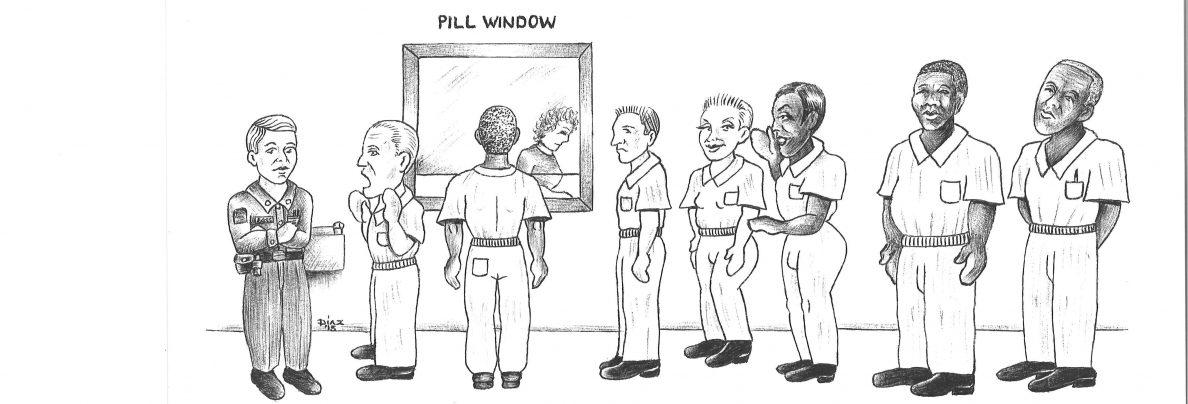
When I went to jail in 2005, one of the biggest problems that I had was at the medication window. One day going to get my HIV medications at the window, I looked at the meds in the cup and they were the wrong meds. There was one too many of the same meds for my HIV medications, and one med I never saw before. This was a big problem because I know that taking the wrong dose of my meds would make me sick – and that med that I never saw before in the cup was not the medication that the doctor ordered for me.

Being told if I did not take the medication in the cup that I would have to go to the hole – that made me very scared, and so I took the medications. Let me say, if I knew what I know today I would have never done that stupid thing, because I got so sick that they had to take me to the ER and I could have died. It is important to know your rights about taking medication while in jail. Today I am an advocate for people that have HIV/AIDS and are in the county jails system. I will never let this happen to someone again while they are in the county jails system. I will always make sure that they know their rights about taking their medications while in jail, and when they are about to come home, I will continue to advocate for their needs.

Continue reading “Getting Out Alive”

Hearts on a Wire

By Najee Gibson

A lot of inmates from the lesbian, gay, bisexual, and transgender (LGBT) community feel lonely because either their families gave up hope for them, or they’re so caught up in the system that they feel like there’s no hope for them when they come out. So they stay back in the same addictive behaviors when they come out, which is not healthy for someone living with HIV.

I did 5 ½ years. I heard about Hearts on a Wire like 2 months before I got released from prison. They were doing an anonymous questionnaire for members of the LGBT community in state facilities: Were you getting health care? How were you being treated? I took the survey and informed them that I was going to be released in April. So they opened their arms and told me to come into the office. That’s how I got plugged in, and from there, things started to blossom. I liked what I heard. All of us need to be understood and cared for, and someone to identify with our hurt. Hearts on a Wire could identify with my hurt, and the bullshit that I put up with being incarcerated, being a person of color – the no-nos, the punishments.

Hearts on a Wire is about 2 years old. We cater to inmates in state facilities in Pennsylvania. We meet every Wednesday, and you pass on what was given to you. We make cards that say, “Keep your head up,” and send them to inmates.

Continue reading “Hearts on a Wire”

“To Help Our People Through This”

Rev. Doris Green on healing communities from the impact of imprisonment and HIV

Reverend Doris Green, founder of Men and Women Prison Ministries and director of community affairs at the AIDS Foundation of Chicago, has been working with prisoners and their families for decades, and fighting AIDS since the epidemic began. She is organizing a coalition of grassroots community organizations to demand access to condoms in the Illinois state prison system. The condom campaign is a policy demand based on the knowledge that good prison health is good community health. “The people on the inside are the people on the outside,” she says. Rev. Green sees her political advocacy as intimately connected with her counseling work with individuals and small groups, rebuilding the community support networks torn apart by mass imprisonment.

Because of mandatory minimum sentences, discriminatory crack possession sentencing, three-strikes laws and other hallmarks of the “war on drugs,” there are now 10 times as many people in prison than there were 20 years ago. People of African descent represent 56% of those imprisoned for drug offenses but only 14% of illicit drug users. “The disparity makes you think nobody’s committing crimes but African Americans and Hispanics,” Rev. Green says. In the past decade, new policies shut ex-prisoners out of public housing, jobs, and social safety net programs. With so many parents, children, spouses and caregivers removed from the community, the emotional, financial and political support systems of entire communities are disrupted.

Continue reading ““To Help Our People Through This””