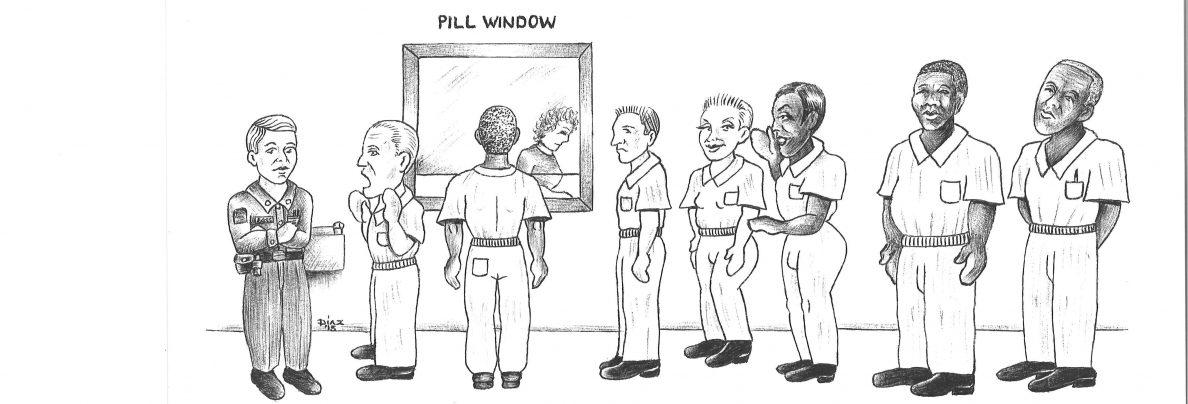
Advocating for Yourself in a Medical Setting

By Teresa Sullivan

From PHN Issue 38, Fall 2018

Principles:

  • You have a right to information.
  • You have a right to be treated with dignity and respect.
  • You are entitled to a good relationship with your doctor or health care provider.
  • You have a right to make decisions that affect your health care and your life.
  • You have a responsibility to be effective.
  • You will be more effective if you have a strategy and a plan. Continue reading “Advocating for Yourself in a Medical Setting”

Quick Tips for Common Ailments

By Timothy Hinkhouse

From PHN Issue 38, Fall 2018

Migraines:

Don’t you just hate it when your day hits a brick wall because you feel a blinding migraine coming on? Some people, it practically debilitates them and leaves them curled up in the fetal position in a dark room on their bed with a cool wet cloth on their forehead while wishing for any immediate relief. Continue reading “Quick Tips for Common Ailments”

The Real Deal on HIV Transmission

By Elisabeth Long

From PHN Issue 38, Fall 2018

The Human Immunodeficiency Virus (HIV) is not spread easily. There are a lot of myths about how people get HIV—from mosquito bites to sharing utensils to toilet seats to coughing and sneezing. None of these are true. The reality is that HIV is only transmitted when a body fluid that carries a high concentration of HIV gets into the bloodstream. Mainly, HIV transmission occurs through unprotected sex and sharing drug use equipment. Fortunately, the risk of HIV transmission can be reduced in
a number of ways. Continue reading “The Real Deal on HIV Transmission”

How to Quit Smoking and How to Not Start Again

By Arielle Horowitz

From PHN Issue 38, Fall 2018

Most smokers know that smoking is bad for their health, but they also know that quitting smoking is not easy. According to the American Lung Association, quitting smoking can be easier if you know your reasons for quitting, talk to a doctor, understand what to expect, and get help. Federal prisons and almost half of state prison systems prohibit smoking cigarettes indoors and outdoors, but more than half of states still allow smoking in prison yards. For those who quit smoking while in prison and are soon to be released, it is important to think about how to not start smoking again outside prison. Continue reading “How to Quit Smoking and How to Not Start Again”

The Hep C Jailhouse Lawyer’s Manual

By Mumia Abu-Jamal, with the assistance of the Abolitionist Law Center in Pittsburgh, PA

From PHN Issue 37, Summer 2018

This manual is designed to walk any person infected with hepatitis C through the obstacle courses erected by medical staff and prison officials who seek to deny or delay hepatitis C treatment which leads to a cure from the infection. Continue reading “The Hep C Jailhouse Lawyer’s Manual”

Planning for Life After Lockup

By Eric McCaa

From PHN Issue 37, Summer 2018

Imagine you have just been released from prison. What do you plan to do with your freedom? Finally eat some real food? Buy some Jordans? Get laid? Engage in your other favorite past-times? And then go report in at the parole office? If this sounds like a good parole plan, you obviously did not spend enough time planning for your future. Maybe what you need is to devise an effective parole plan to enhance your chances for success. Continue reading “Planning for Life After Lockup”

The PREA Problem

by Fatima Malika Shabazz

From PHN Issue 37, Summer 2018

Content warning: this article discusses traumatic experiences, including sexual assault.

I can safely say that at least six out of every 10 times I pick up an LGBTQI (lesbian, gay, bisexual, transgender, queer, questioning and intersex community) newsletter or magazine, there is a person in prison somewhere in the country who is being victimized by prison or jail staff from weaponized PREA standards. If you are unaware of what the acronym stands for, it means Prison Rape Elimination Act. PREA was written to provide a resource (anonymous or otherwise) for people confined in America’s gulags (prisons) and mini gulags (jails) to report rapes and sexual abuses committed by both inmates and staff. However, this policy is often used as a hammer against the very people it was written to protect, while at the same time serving to shield the violators of its policies. Continue reading “The PREA Problem”

Hepatitis A and B

By Arielle Horowitz

From PHN Issue 37, Summer 2018

Hepatitis A

Hepatitis A is a virus that can make it harder for your liver to work. You can get hepatitis A from food or water contaminated with fecal matter (poop), being near someone who has hepatitis A, or having sex with someone who has hepatitis A. It is not spread by sneezing or coughing. Washing your hands often, especially after using the toilet, may help you avoid getting hepatitis A. You can also prevent it by getting a hepatitis A vaccination. It is important to speak to your doctor to be sure that you are properly vaccinated, as everyone’s vaccination needs and effectiveness can be different. Continue reading “Hepatitis A and B”

Words to Live By

Advice from a formerly incarcerated person living with HIV

From PHN Issue 37, Summer 2018

1. Take care of yourself. Make your health your top priority. Ask for what you think you need. Don’t wait for someone to take care of you. Advocating for your health is a constant job, especially in prison or jail. Continue reading “Words to Live By”

How to Avoid Food Poisoning

By Sarah Frankl

From PHN Issue 36, Spring 2018

Foodborne illnesses can be painful and serious. Symptoms can include vomiting, diarrhea, fever and aches. Even if you eat bad food and end up vomiting (or having diarrhea) later in the day, some of the microbes that made the food bad can stay in the gut and continue to cause health problems. Although food poisoning symptoms usually last a few days, some foodborne illnesses can cause more serious health issues that can last for longer. Continue reading “How to Avoid Food Poisoning”